In Collaboration with Ihun Han & Aryan Gupta
Ch!rp
This project is a proposal for an entomology-driven food biosystem, featuring a working cricket farm and a café that introduces insect-based foods through familiar offerings, such as pasta, croissants, and coffee made with cricket flour.
Designed using research into house cricket behavior and life cycles, the modular apparatus farm supports scalable production while transforming waste through a biodigester that generates renewable energy. Crickets are processed into both high-protein flour and chitin for bioplastics, which are used in café wares and visitor workshops.
Skills
Prototyping, Sketching, 3D printing, CAD, Project Management, Systems Thinking, Systems Mapping

The cricket farm is integrated into the café to help visitors become more familiar and comfortable with crickets. The natural chirping of the crickets also serves as ambient background sound within the café. By bringing insect farming and dining into the same space, the café aims to reduce the stigma surrounding insect consumption and make eating insects feel more approachable.
Why Entomology?
Entomophagy is the practice of eating insects and offers an alternative to conventional livestock production. Insects require significantly less land, water, and feed than cattle while efficiently converting feed into protein. As population growth increases global food demand and available agricultural land becomes increasingly limited, insect farming presents a space-efficient way to produce nutrition while reducing the resources required for livestock farming.
Cattle are also a significant source of methane emissions. Replacing a portion of conventional livestock consumption with insect-based protein could reduce demand for cattle and help lower the greenhouse gas emissions associated with livestock production. Insects can also be raised in compact, controlled environments, making them particularly suitable for areas where land and resources are limited.
This project is a speculative exploration of what an entomophagy-based food system could look like in the future. By integrating insect farming with a café, the project aims to make insects more visible, familiar, and approachable as a food source. It challenges the stigma surrounding insect consumption and encourages environmentally conscious consumers to consider entomophagy as a potential way to reduce the environmental strain of our food system.
Detailed Systematic Overview
Our system consists of three main components: the Growing Sector, Processing Sector, and Waste Collection Sector.
The Growing Sector is where the crickets are bred and raised. Frass and cricket mortality waste are transferred to the Waste Collection Sector, where organic waste is converted into biogas through anaerobic digestion in our biodigester. Food waste generated by the café is also collected and added to the biodigester, allowing waste from both the cricket farm and café to contribute to energy production.
Each day, a selected number of adult crickets are transferred from the Growing Sector to the Processing Sector. The crickets are first frozen as a humane method of euthanasia, minimizing distress and preventing unnecessary suffering. Their wings and legs are then removed and processed for chitin, which is used to produce bioplastic. The remaining bodies are dried and processed into cricket flour, which can be further refined into cricket powder. Both cricket flour and powder can be incorporated into coffee and dough-based products served in the café.
The coffee is served with coasters made from chitin-based bioplastic. Chitin bioplastic can withstand temperatures of up to 290°C, making it suitable for use with the café's hot beverages (Zhou et al., 2022).
The café also includes hands-on bioplastic workshops, where customers can use materials such as chitosan, cornstarch, agar-agar, and glycerol to create their own bioplastic coasters. For products that require more advanced manufacturing, we partner with external producers to create bioplastic pots and bags that customers can purchase.
The bioplastic pots are paired with plants grown using biofertilizer produced from the biodigester's digestate, creating another connection between the system's waste and outputs. In this way, the system creates a circular flow between cricket farming, food production, waste management, energy generation, material production, and plant growth.

Visualization of the circular zero waste design
Brainstorm

Research
Through comparative research on edible insects, we identified crickets as the most viable species due to their high protein yield, rapid growth, and existing cultural adoption in the U.S. We complemented this with research into industrial cricket farming, focusing on scalable management systems and the crickets’ quality of life.


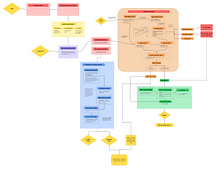


System Diagram Proposals


Sketches


System Diagram

This includes a general systems diagram and a detailed diagram calculating daily production logistics of the farm.

This diagram visualizes the interconnected inputs and outputs of the system, highlighting the circular economy principles embedded in the apparatus.
System interactions


Model


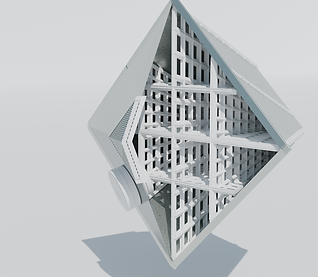
Our design contains modular pod housing for crickets and for collecting cricket frass. All pods are connected to a biodigester, where the frass is converted into electricity to power the system.